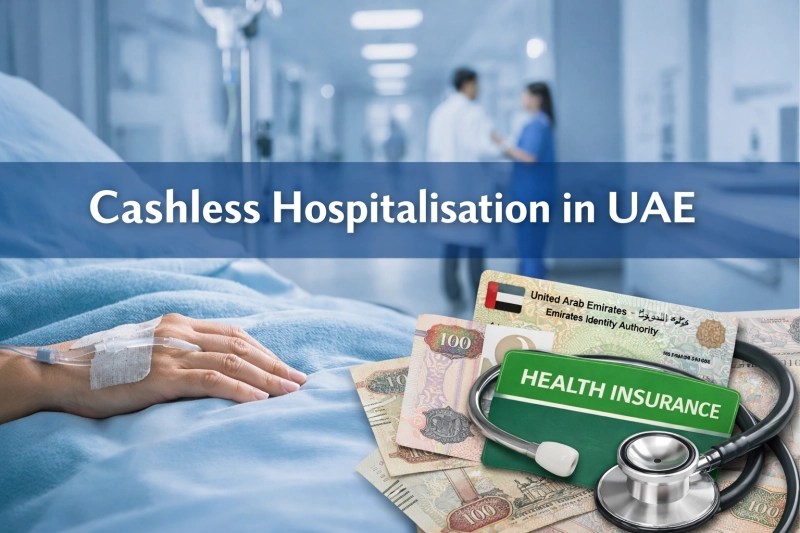
Cashless hospitalisation is one of the most valuable features of health insurance in the UAE because it reduces the biggest stress point in a medical emergency: paying large hospital bills upfront. However, cashless treatment only works smoothly when you understand networks, pre-authorisation, and the documents the hospital and insurer need.
What Is Cashless Hospitalisation in the UAE?
Cashless hospitalisation (also called direct billing) means the hospital bills the insurer or TPA directly for covered inpatient treatment, instead of you paying the full amount and claiming reimbursement later.
You may still pay out-of-pocket amounts such as:
- Co-payments or coinsurance
- Deductibles
- Non-covered items (for example, excluded medicines or services)
How Cashless Health Insurance Works in the UAE
In the UAE, cashless hospitalisation usually involves three parties:
- The insurer (the company that provides the policy)
- The TPA (administrator that manages approvals and claim processing for many medical policies)
- The network hospital (provider that has a direct billing agreement)
The hospital requests approval for planned treatment, the TPA/insurer confirms medical necessity and eligibility, then the covered bill is settled directly between parties according to your policy terms.
Eligibility Criteria for Cashless Hospitalisation
Cashless hospitalisation generally requires that:
- Your policy is active and premiums are paid.
- The hospital is in your network.
- The admission is medically necessary and supported by clinical notes.
- Pre-authorisation is approved for services that require it.
Emergency stabilisation is often handled differently from planned admissions, but the hospital will still verify eligibility and coverage as soon as possible.
Types of Health Insurance Plans Offering Cashless Treatment
Cashless treatment is commonly offered through:
- Employer group medical plans
- Individual and family plans with network access
- Visitor or short-term medical plans (typically for emergency inpatient only, depending on wording)
The main difference is not “cashless vs not”, it is how broad the network is and how the plan handles pre-approvals, sub-limits, and co-pay.
Network Hospitals and Why They Matter
A “network hospital” is a provider that has a billing agreement with your plan. If you go out-of-network, you may:
- Lose cashless access and need to claim reimbursement.
- Face higher co-pay/coinsurance.
- Have certain services excluded if your plan is strictly network-based.
Before you buy or renew, check the hospitals you actually use (near home, work, school areas), and confirm network tier compatibility.
Step-by-Step Process to Avail Cashless Hospitalisation
In most UAE hospitals, the cashless process looks like this:
- Present your Emirates ID (when required) and your medical e-card (physical or digital).
- The hospital verifies policy eligibility and network status.
- The doctor issues an admission or procedure recommendation.
- The hospital submits a pre-authorisation request to the TPA/insurer.
- Once approved, you sign consent forms and pay any applicable deposit only if required by policy rules (many plans do not require deposits for covered admissions).
- Treatment proceeds, then the hospital bills the insurer/TPA directly for approved items.
- At discharge, you pay non-covered amounts (co-pay, excluded items, upgrades).
Documents Required for Cashless Claims
Document requirements vary, but hospitals and TPAs typically request:
- Health insurance e-card
- Emirates ID (for residents) and passport/visa copy when relevant
- Doctor’s notes, diagnosis, and treatment plan
- Lab and imaging results supporting the admission/procedure
For maternity, chronic care, and complex procedures, the documentation tends to be more detailed.
Pre-Authorization: What It Is and Why It’s Important
Pre-authorisation is the approval step where the insurer/TPA confirms that:
- The requested treatment is covered by your policy
- The treatment is medically necessary
- The selected provider is eligible under your network
Without pre-authorisation (when required), the claim may be reduced or declined, and you might be asked to pay and claim later.
If you want help choosing plans that offer smoother cashless access, start with InsuranceHub’s health insurance comparison pathway.
What Expenses Are Covered Under Cashless Treatment?
Covered expenses depend on policy wording, but cashless hospitalization often includes eligible inpatient items such as:
- Room and board (subject to room category limits)
- Surgeon, anaesthetist, and hospital fees
- Operating theatre charges
- Medicines administered during admission
- Diagnostics performed during the inpatient stay
Even within cashless, coverage can be constrained by sub-limits and medical-necessity rules.
What Is Not Covered in Cashless Hospitalization?
Common reasons an item may not be covered cashless include:
- The hospital is out-of-network
- The service is excluded by the policy (policy exclusions vary)
- The service requires pre-authorization and was not approved
- The claim relates to a waiting period or a non-disclosed pre-existing condition
- The patient requested non-medical upgrades (for example, room upgrades beyond entitlement)
Always ask the hospital billing desk for an itemised estimate and what is approved before proceeding with elective admissions.
Cashless vs Reimbursement Claims: Key Differences
Both options can be valid, but they suit different situations.
| Feature | Cashless (direct billing) | Reimbursement |
|---|---|---|
| Upfront payment | Usually limited to co-pay/exclusions | Often you pay first, then claim back |
| Where you can go | Primarily network providers | Can include out-of-network (subject to policy) |
| Pre-approval importance | High for planned care | Still important, but process differs |
| Speed and stress | Usually smoother during admission | Can be slower, documentation heavy |
Benefits of Cashless Health Insurance in the UAE
Cashless hospitalization is valuable because it:
- Reduces the need for large emergency payments
- Speeds up admission workflows when approvals are in place
- Improves access to network hospitals and planned procedures
- Gives clearer visibility on co-pay amounts at discharge
Common Mistakes to Avoid When Using Cashless Facility
Most cashless problems happen due to avoidable gaps:
- Going to a hospital that is not in your network tier
- Assuming “cashless” means “no payment” (co-pay and exclusions still apply)
- Not requesting pre-authorization early for planned admissions
- Not disclosing medical history accurately during purchase, which can trigger claim disputes
- Failing to check sub-limits (for example, maternity, dental, certain diagnostics)
Tips to Choose the Right Cashless Health Insurance Plan
When comparing plans, make the decision based on real usage, not only premium.
Prioritise:
- Network hospitals near where you live and work
- Co-pay structure for inpatient, outpatient, and pharmacy
- Annual limit and key sub-limits relevant to your life stage
- Clear pre-approval rules for major services
If you need help interpreting plan details, an insurance advisor UAE customers trust can explain the practical differences between two similar-looking quotes.
Top Health Insurance Providers Offering Cashless Facilities in UAE
Many well-known insurers in the UAE offer plans with cashless networks, but the exact provider access depends on the plan tier and TPA arrangement.
In the UAE market, cashless medical networks are commonly delivered through TPAs such as NAS, NextCare, and MedNet, and are offered across a wide range of insurers. The right approach is to short-list plans based on your preferred hospital and clinic access, then compare quotes.
If your goal is to buy online, compare options, and get support for documents and next steps, you can start at InsuranceHub.ae.