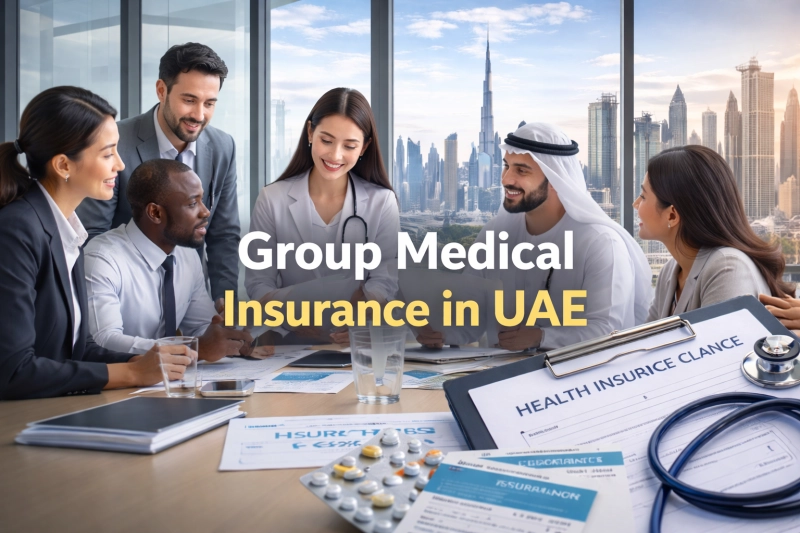
Many companies in the UAE treat medical insurance as a compliance task, but the right group medical insurance plan can also improve retention, reduce HR friction, and control long-term healthcare costs. This guide explains how corporate medical insurance works in the UAE, what is mandatory, what it covers, and how to set up, renew, or upgrade your plan smoothly.
What Is Group Medical Insurance?
Group medical insurance (also called company health insurance or corporate medical insurance) is a policy purchased by an employer to cover employees, and often their dependents, under a single contract.
Compared to individual medical insurance, group policies typically offer:
- Simplified enrollment and renewals under one master policy
- Employer-led plan design (benefit tiers, networks, add-ons)
- Potentially stronger pricing due to risk pooling (depending on group size and member profile)
On InsuranceHub.ae, employers can request quotes, compare options, and get guidance from an insurance advisor for the UAE market: Group Health Insurance UAE.
Is Group Medical Insurance Mandatory in the UAE?
In the UAE, health insurance requirements depend on the emirate, the employer category, and current regulations.
As of recent regulatory updates, employer responsibility for medical coverage has expanded across the UAE. For official guidance and updates, employers should also refer to their relevant health authority:
If you want an overview of the 2025 regulatory direction and what it means for employers, see: New Insurance Regulations in UAE.
Benefits of Group Medical Insurance for Employers
A well-structured group medical insurance plan is more than a benefit, it is an operational tool for HR and finance.
Key employer benefits:
- Compliance support: reduces the risk of visa, onboarding, and audit issues linked to missing or non-compliant cover.
- Retention and hiring advantage: strong medical benefits are a major decision factor for expats and families.
- Lower downtime: faster access to care can reduce absenteeism and improve productivity.
- Predictable budgeting: annual premiums make healthcare spend more controllable than ad-hoc reimbursements.
- Centralized administration: one renewal date, one policy framework, and structured employee tiers.
For a practical employer-focused view, you can also read: How Does Group Medical Insurance Benefit Employers?
What Does Group Medical Insurance Cover?
Coverage depends on the plan tier and the insurer, but most corporate health policies in the UAE are built around these benefit categories:
Core benefits commonly included
- Inpatient hospitalization (room, board, surgeon fees, medicines while admitted)
- Emergency treatment
- Daycare procedures (treatments that do not require overnight admission, if included)
Common enhancements depending on tier
- Outpatient consultations (GP and specialist)
- Diagnostics (blood tests, imaging)
- Pharmacy benefits (subject to formulary rules)
- Maternity and newborn cover (usually with waiting periods and sub-limits)
- Dental and optical benefits
- Chronic and pre-existing condition coverage (rules vary by plan and authority requirements)
Always confirm:
- Annual limit (sum insured)
- Co-pay and co-insurance levels
- Network access (clinics and hospitals employees can actually use)
- Exclusions and waiting periods
If your team struggles with policy wording, InsuranceHub’s educational guide can help: Insurance Terminologies
Types of Group Health Plans in UAE
Most companies structure benefits into tiers so they can control cost while still offering competitive coverage to key roles.
Common plan types in the UAE include:
| Plan style | Typical use case | What to watch |
|---|---|---|
| Basic / entry-level compliant plans | Cost control, large blue-collar populations, compliance-first setups | Network suitability, higher co-pays, limited outpatient and dental |
| Enhanced mid-tier plans | SMEs and mixed workforces | Balance between outpatient, pharmacy, maternity, and network access |
| Executive / premium plans | Leadership teams, client-facing roles, retention strategy | Higher limits, broader networks, and possibly worldwide options, costs can rise quickly |
Choosing the right tier mix is often more impactful than chasing the lowest premium, because network fit and co-pay structure strongly influence employee satisfaction.
Minimum Employee Requirement
The minimum number of employees required to issue a group medical insurance policy varies by insurer and plan. Many insurers can consider small groups, but underwriting rules differ.
In practice:
- Some insurers accept very small groups (for example, a handful of employees).
- Other insurers may require a higher headcount or specific employee mix.
If you are a start-up or small business and unsure whether you qualify for a group plan, start here: Health Insurance Packages for Small Business
Documents Required for Group Policy Setup
Most insurers and TPAs will request a standard set of company and employee documents. Exact requirements vary by emirate and insurer.
Commonly requested documents include:
- Company trade license
- Establishment card (if applicable)
- Company stamp and authorized signatory details
- Census list (employees, DOB, nationality, salary band if needed, role category)
- Emirates ID copies (front and back)
- Passport and visa copies
- Previous policy details and claims experience (if you are switching or renewing)
If dependents are included, you may also need relationship documents (for example, marriage certificate, birth certificates), depending on insurer rules.
How to Choose the Right Group Medical Insurance Plan
A strong selection process is part benefits design, part risk management.
Evaluate these areas before you commit:
Network fit
- Where do employees live (Dubai, Abu Dhabi, Northern Emirates)?
- Which clinics and hospitals do they actually use?
- Do you need cross-emirate access for commuters?
Cost structure (not only premium)
- Co-pay levels for consultation, pharmacy, and diagnostics
- Annual limits and sub-limits
- Whether the plan encourages unnecessary out-of-network spending
Operational readiness
- Employee onboarding and deletion rules
- E-card issuance timelines
- Pre-approval process for major procedures
- Claims support and escalation path
If you want a broader corporate insurance overview beyond health (liability, property, cyber, and more), this page can help: Company Insurance UAE
How to Renew or Upgrade Your Corporate Policy
Renewal is the best time to fix pain points employees faced during the year, and to correct plan design issues that quietly inflate claims costs.
A clean renewal process usually includes:
- Start early: aim to review options several weeks before expiry to avoid forced last-minute renewals.
- Review utilization patterns: high outpatient usage can signal that co-pay is too low, or that primary care access is not well designed.
- Re-check networks: provider lists and network tiers can change.
- Upgrade strategically: instead of upgrading everyone, consider tiering (for example, Executive for leadership, Enhanced for staff, Basic for compliant roles).
- Confirm compliance: especially if your workforce spans multiple emirates or visa types.
For employers that want a dedicated group-health landing page, see: Employer Health Insurance.