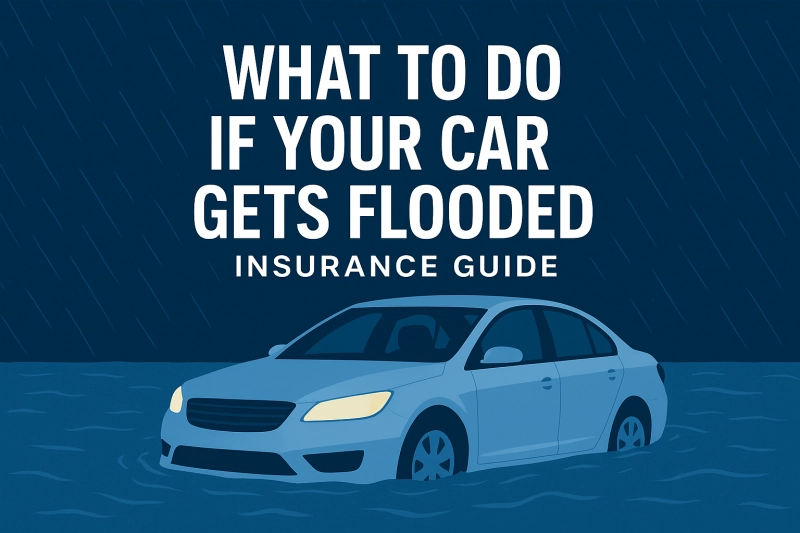
When sudden torrential rain transforms Dubai’s roads into fast-moving streams, cars can become submerged or stall in a matter of minutes, leaving drivers stranded and unsure what to do next. Flooded vehicles are one of the most common outcomes during extreme weather, yet many motorists are unaware of the correct immediate actions - or how their insurance policy responds to water damage.
This guide walks you through the essential steps to take the moment your car is flooded, explains how insurance companies assess such claims, and provides practical tips to ensure you receive the maximum compensation you’re entitled to.
Assess Safety First
- Turn the ignition off and exit through windows or doors if water is below sill level.
- Move to higher ground and call 999 if trapped.
- Do not attempt to restart a soaked engine—it risks hydrolock and voiding cover.
Call Emergency Services and Your Insurer
- Contact police (non-emergency 901) for an official accident report; many insurers require this.
- Ring roadside assistance from your policy or RTA.
- Notify your insurer within 24 hours so the claim is logged on record.
Document the Scene
- Take geo-tagged photos of water depth, interior damage and road conditions.
- Record a 360-degree video; clear evidence supports faster settlements.
Tow, Inspect, Estimate
Most comprehensive policies cover towing to an approved garage. A surveyor will:
- Assess electronics, engine, upholstery, airbags and sensors.
- Recommend replacement versus repair.
- Estimate salvage value if the vehicle is declared a total loss.
Does My Insurance Cover Flood Damage?
| Policy Type | Water-Damage Coverage | Excess/Deductible |
|---|---|---|
| Third-party liability | Not covered | N/A |
| Basic comprehensive | Usually covered, but driving through deep water may void claim | AED 500–1 500 |
| Premium comprehensive with natural-perils add-on | Covered, including accessories and personal items | AED 0–500 |
Fine Print to Check
- Exclusion if driver ignored police weather warnings.
- Limit on electrical components (e.g., stereo, infotainment).
- Whether insurer pays replacement market value or depreciated value.
Mitigation Tips
- Park on elevated levels in underground car parks.
- Install a water-sensing battery cut-off.
- Subscribe to RTA weather alerts.
Claim Timeline
- Report within 24 hours.
- Submit police report and photos.
- Surveyor visit in 48 hours.
- Approval and repairs or payout in 7–14 days.
Total-Loss Scenarios
If restoration cost exceeds 70 percent of current value, the insurer may settle at market value. You can negotiate salvage purchase if you wish to repair the car privately.
Conclusion
A sudden downpour can leave you stranded, but a calm response and the right insurance will get you back on the road. Remember: when your car gets flooded, safety comes first, documentation is critical, and comprehensive coverage from insurers available on insurancehub.ae is your best financial defence.